Introduction


I. Curriculum: Constructs and Deliver Appropriate Curriculum for Students
C1 – Relates content knowledge to other subject area

The M&M Counting book is a double resource. When used not only are students working on math but reading as well. Using this lesson shows that I can relate content knowledge to other areas. The book includes numbers, shapes, colors, and sets.

This document reflects my thoughts and ideas about the liberal arts education that I received during my college career. It also shows how Liberal Arts has provided me with general knowledge and intellectual skills in courses outside the usual subjects such as English, math, science, and history.
C2 – Teaches subject matter accurately

Taking over someone else’s class is not an easy task. To break the ice and get to know my students a little better, I created a lesson that was based towards them and language. This lesson was created for students to work on their descriptive writing while getting to know them.

This lesson was created to help those who struggle with different language concepts. This 7th grade lesson was broken down to students who are at a 3rd and 4th grade level.
C3 – Teaches content from multiple viewpoints

This lesson plan shows that I can work with others to create an effective lesson plan to teach sensitivity to diversity.

This power-point was created so that I inform others about life in the special education field from a first year teacher’s point of view.
C4 – Teaches students to use critical thinking and problem solving strategies

This Science Trail activity provides different learning methods such as working together as a group and individually, hands-on experiences, and problem solving while learning about water.

Creating this lesson allows students to work together as partners to try and figure out certain objects.
C5 – Models appropriate oral communication

This interview allowed me to come up with appropriate questions to find out more about life in education while communicating appropriately.
C6 – Models appropriate written communication skills

This is a letter to a parent informing them that I will be teaching their child for the next 6 weeks and what I plan to accomplish while doing so.

This letter was written to inform parents of the S.S. unit coming up and what will be taking place. It also encourages parent participation.
C7 – Teaches from a personal philosophical base

This paper expresses my personal beliefs about education.

This lesson expresses my beliefs of citizenship and its importance.
C8 – Uses interdisciplinary instruction as appropriate

This music lesson is part of my S.S. unit. Its shows interdisciplinary action by combining the subjects music and history. The students are learning about Native American culture by researching their past history and then reporting their findings with music.
C9 – Uses effective questioning strategies

This document shows I can write different levels of questions for a children's book.
II. Assessment: Assesses students’ learning and development with a variety of measures
A1 – Develops appropriate tools to assess learning

This assessment was performed so that I could have practice writing and handling future behavioral issues in the classroom. It also gives me a visual about what students' issues, triggers, and how to prevent or decrease them.

After a lesson on poetry, I had my 3rd grade class write a Haiku about their grandparent(s). They could talk about anything as long as it was school appropriate, about a grandparent, and used the Haiku format.

This quiz was created to check for comprehension after a lesson on synonyms. I used fill in the blank that way the students had a wide variety of words to think of.

This worksheet was created to show me what my students learned from a math lesson. It gave them a visual allowing them to show-off what they know.

Developing writing skills at a young age are important. A rubric was created and used as my students had to create a writing about a grandparent. Giving them a rubric showed them what I was looking for to get a good grade.

A graphic organizer was used to check for comprehension as my 3rd grade reading group read books about different characters. This showed me if they really read and understood the book.
A2 – Assesses learning through standardized and teacher-constructed tests

This study was done so that I could find a child's reading weaknesses and try different methods to help make those weaknesses stronger. Information was found using different tests and teaching methods.

Working with a peer, I administered and was given the Peabody Picture Vocabulary Test in order to understand the usefulness of giving a standardized test to a student.
A3 – Assesses learning through appropriate alternative measures

This chart was created to accommodate those who have been identified and referred to special education so that they have a better chance succeeding in the general education classroom. Their curriculum is also modified to help reach that success.
A4 – Keeps records to determine and report student progress

This progress report was checked daily for a student that I was working with one-on-one in my 7th grade placement.

A grade book was created for my two students at my 7th grade placement. It was used to keep track of personal growth and as a check for myself to see how affective I was as a teacher.
III. Relationships: Establishes professional and reciprocal relationships with other invested in students’ learning
R1 – Collaborates with students, colleagues, parents, and community agencies, exhibiting sensitivity for cultural diversity (samples of letters, memos to students and parents, including progress reports.)

This letter was created to inform a parent of a study that was going to place with her child and the reasons for doing so. Reading comprehension and other abilities was the main focus for this study.
R2 – Acts with full awareness of ethical and legal responsibilities of teachers


This permission slip was created so that I could tape lessons in my 3rd grade student teaching placement.
R3 – Values life-long learning and personal/professional development

This certificate shows my participation as a science fair judge at Metro North Elementary School.\

This certificate shows my participation in Manchester College's Pre-Professional Annual Workshop.

This certificate show my participation in IAEYC's annual State Conference in Indianapolis, IN
R4 – Engages in research and reflection on teaching practices

This paper shows reflection on ten hours of observations I completed for Literacy Block.

This is an interview I conducted in EDUC 350 of a school psychologist about different
assessments for special needs.
R5 – Exhibits a service orientation to students & teaching, valuing all aspects of students’
well-being

This paper is about my volunteering experience at an elementary after school program in Anderson, IN
IV. Environment: Creates positive and caring environments for student development and learning
E1 – Plans informative lessons and units, alone and in teams

This is a first grade lesson plan about a literacy activity using If You Give A Mouse A Cookie.

This is a third grade literature unit plan studying the Sioux Indians. I created a variety of lesson to develop student learning.
E2 – Plans learning opportunities that respond to individual differences

This is a
paper reflecting on my opportunity to experience an

Fractions was the lesson of the day in a 7th grade classroom. This lesson was created to accommodate those who are at lower learning level. The lesson was broken down but the students were able to get the same lesson but in a way they would understand.
E3 – Uses a variety of teaching methods and materials

This paper shows that I can write objectives based on Indiana Standards for elementary school grades. These objectives are the basis for concepts taught and how they would be taught.

In order to prepare for a test, I created a study guide to give the students a visual of what to expect on the test.
E4 – Uses a variety of appropriate media and technology

This website was created in order to enrich a lesson on tracing the journey of rain. This book can be used to teach the water cycle and other water units. Using the technology within the site allows students to enhance their knowledge in the subject matter independently, partners, or groups by completing a series of activities throughout their reading.

This activity involves the use of internet technology to supplement a science trail activity. Using this technology allows students to deepen their understanding of the water cycle.
E5 – Motivates students to want to learn individually, collaboratively, and cooperatively
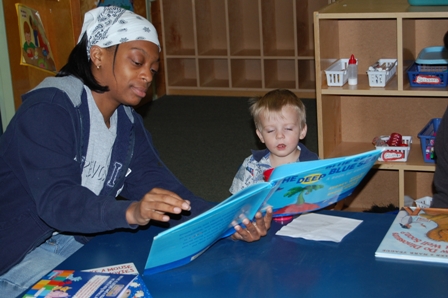
The Day of the Child was spent at an early learning center to motivate children to get excited about books. Having cookies and milk while sitting at a spot picked out by the child motivated him to sit and listen while I read.
E6 – Manages student behavior in positive, safe ways

This document is a plan for how I plan to manage my future classroom in a safe and positive method. Respect and flexibility are the main ideas of my perfect classroom.

A drawing of my personal classroom
helps put my management plan in perspective.