Introduction
I. Curriculum: Constructs and Deliver
Appropriate Curriculum for Students
C1 – Relates content
knowledge to other subject areas
This paper takes a
look at my liberal arts education, explaining
the importance and value
of the classes I have
taken at Manchester College.
This mini unit covers global warming, a topic that was discussed
thoroughly in English 364. This small unit shows my ability to
take content knowledge and relate it to other subject areas.
C2 – Teaches subject
matter accurately
This
lesson on ordinal numbers teaches students how they are used and then
allows
students the opportunity to practice their use.
This is an introductory health lesson on how germs can spread.
This was an evaluation completed by my supervising teacher after an
introductory health lesson on spreading germs.
C3 – Teaches content
from multiple viewpoints
Social Studies/Writing Lesson on the Underground Railroad:
This lesson has students writing from the perspective of either a runaway slave or a conductor on the Underground Railroad.
This was a project done in a Mild Interventions course that allowed me
to experience what it would be like to be blind for a day. This is
the reflection that was written after the experience.
C4 – Teaches students
to use critical thinking and problem solving strategies
This lesson
is based on the 5 E method allowing students to
first be engaged, then
to
explore, followed by a teacher explanation, students then elaborate on
the concept, and the teacher evaluates.
5 E Science Lesson
This lesson is based on the 3 E method in which
the teacher first engages the students, then allows them explore, and
lastly evaluates.
C5 – Models appropriate
oral communication
This document displays my ability to communicate orally with another
professional; for this assignment I was asked to interview a teacher
about reading instruction.
C6 – Models appropriate
written communication skills
This paper was written for Experiencing
the Arts, and demonstrates written communication skills.
C7 – Teaches from a
personal philosophical base
Credo :
This paper takes
a look at three educational theories, explaining what I wish to take
from each of them as future educator.
This paper explains my philosophy on teaching social studies in the
classroom, and how it can be integrated in to other subjects.
C8 – Uses
interdisciplinary instruction as appropriate
This unit over
the Civil War integrates subjects such as math,
music, and science.
This algebra lesson studies terms to help students identify which
operation to use when creating an expression.
C9 – Uses effective
questioning strategies
This document contains
questions from each of Boom's levels.
This lesson was created for a student with reading difficulties.
In the lesson comprehension is addressed using Bloom's Questioning.
II. Assessment:
Assesses students’ learning and development with a variety of measures
(*Include 5 sample
assessments)
A1 – Develops
appropriate tools to assess learning
This document was handed out to students as a guideline for their
health assessment. It explains all the requirements for the
poster.
Health Rubric for
Assessment :
This is a rubric that was designed to assess the
posters that were created by students to wrap up a health unit on
germs.
A2 – Assesses learning
through standardized and teacher-constructed tests
This
document assesses a student's reading
strengths and weaknesses through the completion of an Informal Reading Inventory.
This is a quiz that I created in order to assess the information that
was retained from a lesson on the Civil War.
A3 – Assesses learning
through appropriate alternative measures
This document assess a
student's behavior through observation.
A4 – Keeps records to
determine and report student progress
This document examines a
reader through observation, looking for strengths and weaknesses in
order to develop an appropriate plan of action.
III. Relationships:
Establishes professional and reciprocal relationships with other
invested in students’ learning
R1 – Collaborates with
students, colleagues, parents, and community agencies, exhibiting
sensitivity for cultural diversity (samples of letters, memos to
students and parents, including progress reports)
This is a parent letter
that was sent home introducing myself as a student teacher.
This lesson plan was designed with a peer. It shows my ability to
work together and communicate with others.
R2 – Acts with full
awareness of ethical and legal responsibilities of teachers
Awards; memberships in
professional organizations\
This evaluation shows that I act with full awareness of the legal
responsibilities of a teacher.
R3 – Values life-long
learning and personal/professional development
Participating in campus
activities
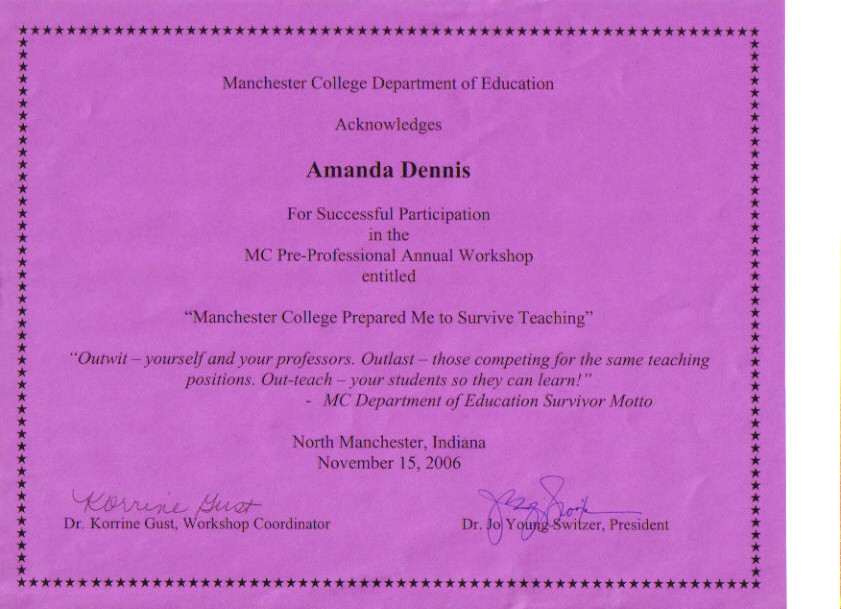
Manchester Pre-Professional Workshop
This certificate of attendance was given at one of Manchester College's
Pre Professional Workshops for education majors. These conferences
allow students opportunities for professional development.
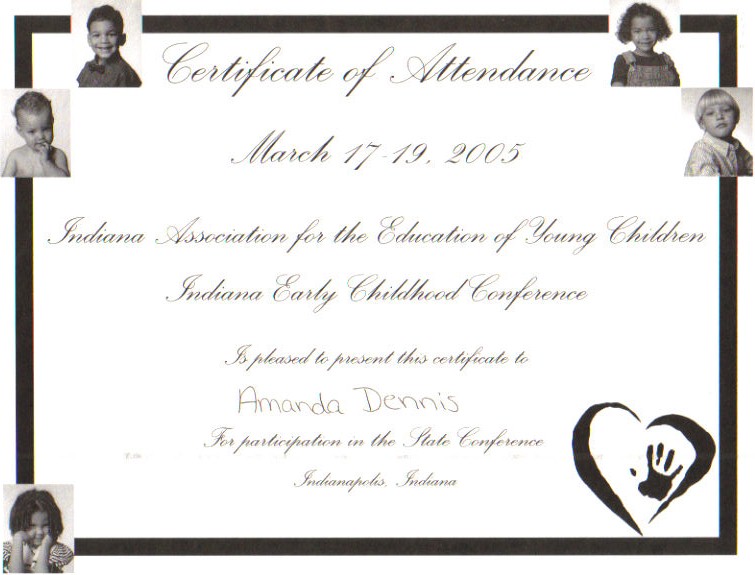
This attendance certificate to the IAEYC
conference shows that I value life long learning and professional
development.
R4 – Engages in
research and reflection on teaching practices
This is a reflections
paper from an observation in a special needs preschool.
Content and Methodology Paper:
This paper reflects on the education courses that
I have taken at Manchester College.
R5 – Exhibits a service
orientation to students and teaching, valuing all aspects of students’
well-being
This document is a reflection of my experience tutoring for
two kindergarteners.
This document was written reflecting on my volunteer experience at
Manchester Church of the Brethren Preschool.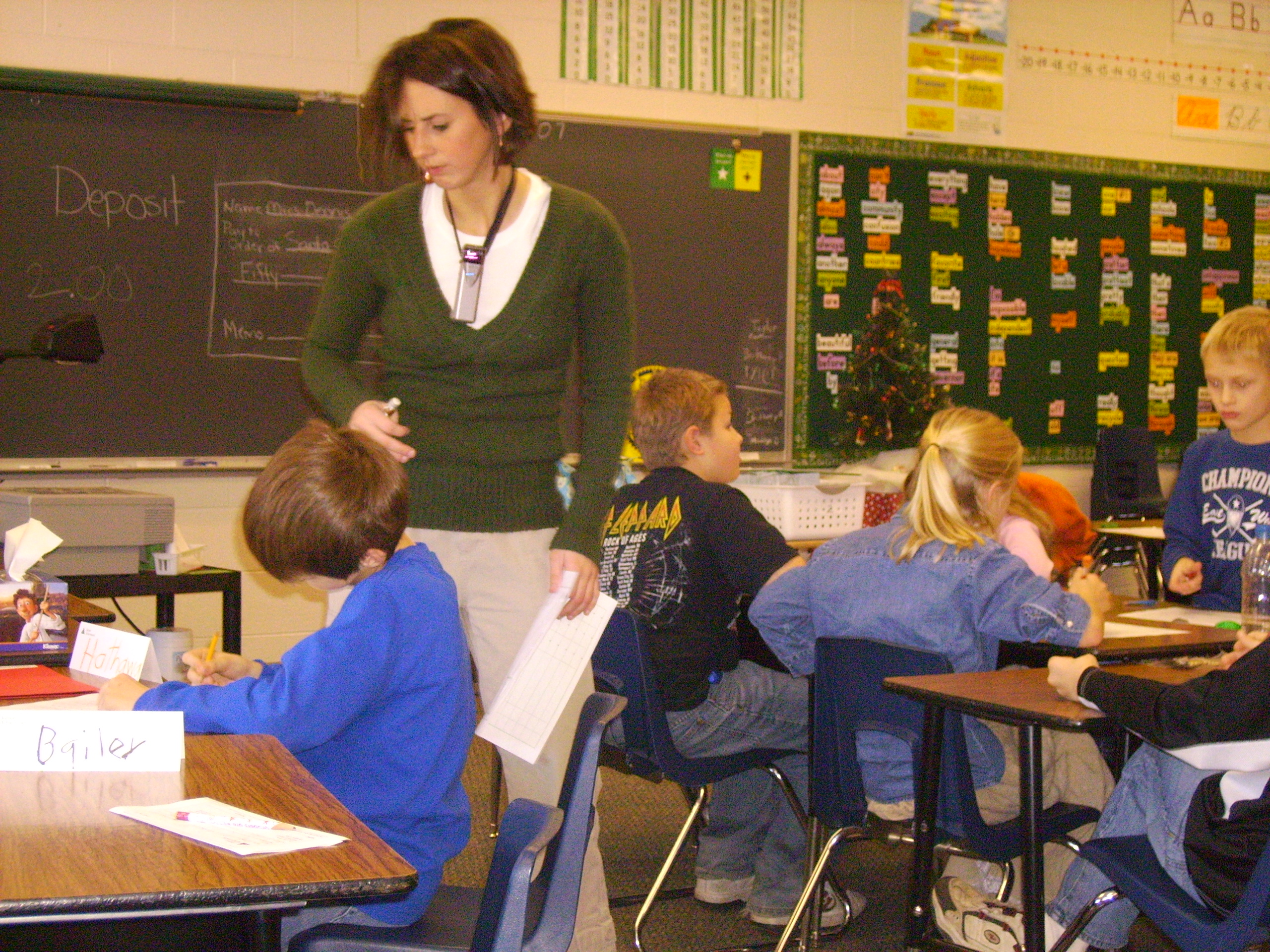


IV. Environment: Creates positive and caring environments for student development and learning
E1 – Plans informative lessons and units, alone and in teams
This is a lesson plan that I observed in a general education classroom and then added modifications for special needs students.
This is a skeleton of a social studies unit for 4th grade covering the Civil War era.
E2 – Plans learning opportunities that respond to individual differences
Celebrating Diversity Workshop
This paper reflects my experience at Manchester College's Celebrating Diversity Workshop. It explains how individual differences should be embraced.
This lesson was developed to meet the individual needs of a specific student.
E3 – Uses a variety of teaching methods and materials
This lesson on the "My Pyramid" was designed to get students out of the classroom. To complete the activity students must go on a scavenger hunt using different locomotor skills. Once completed they return to the classroom to participate in a web quest.
E4 – Uses a variety of appropriate media and technology
*Videotape of student teaching segment
This is an interactive website that I created to enhance a science trail on the "My Pyramid."
E5 – Motivates students to want to learn individually, collaboratively, and cooperatively
Photographs of you working with students
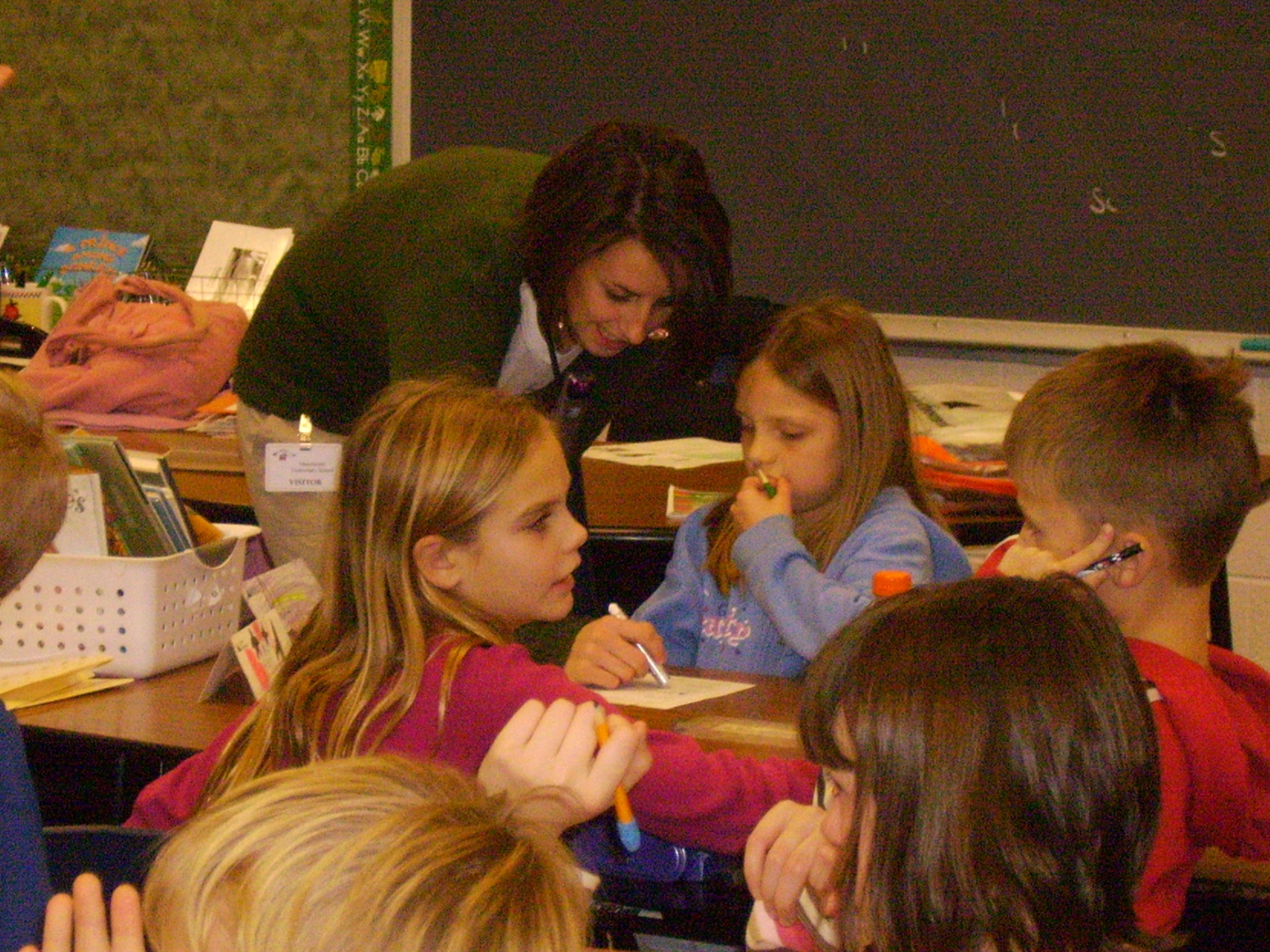
This picture shows me in action working with students in a third grade classroom.
This lesson based on reading fluency and expressions, has students working individually and in groups.
E6 – Manages student behavior in positive, safe ways
This document is a compilation of my beliefs on classroom management. Included are my top ten beliefs, routines and procedures, implementation, and a parent letter.